


Loading...

Leadership Retention in India: The Rising CXO Exit Wave

Every time a CXO quits, a company doesn’t just lose a leader; it loses a version of its future. Yet across India, more top executives are walking out mid-strategy than...
Leadership Retention in India: The Rising CXO Exit Wave

Every time a CXO quits, a company doesn’t just lose a leader; it loses a version of its future. Yet across India, more top executives are walking out mid-strategy than ever before. 

In FY25 alone, 141 MDs and CEOs exited NSE-listed companies, up from 119 the previous year. It is the sharpest rise in recent times. Behind those numbers are stories of pressure, burnout, and disconnection between ambition and reality. 

This isn’t a wave that came out of nowhere. It’s been building silently, driven by rising board expectations, performance scrutiny, and the post-pandemic rethink of what leadership and leadership retention in India should feel like. 

For founders and executive recruiters, this isn’t a “turnover issue” but a mirror to how leadership itself is evolving in India. 

The new reality of Leadership Retention 

The leadership ladder has never been this steep (or this slippery). Today’s CXOs face shorter tenures, faster evaluations, and louder stakeholder demands. The result? Senior leadership attrition in India is becoming the biggest threat to strategic continuity. 

According to corporate data and HR trend analyses, CXO turnover in India has increased by nearly 20% year-on-year. CFOs and CHROs are showing the shortest tenures, with nearly 70% leaving within two years due to a mismatch between mandates and unrealistic targets. 

At the surface, this looks like mobility. In truth, it’s instability. 

Leaders are walking away not because they can’t deliver, but because what they signed up for no longer matches what they’re expected to carry.

Why India’s top CXOs are Quitting faster than ever 
leadership retention stat

1. The mismatch between power and purpose

Many leadership roles are designed around authority, not alignment. A new CXO enters with a clear vision but soon realises their decision-making power is limited or that the board’s appetite for risk doesn’t match their strategy. 

When power feels performative, purpose fades fast. So does the leadership retention.

2. The burnout nobody talks about

Long hours, pressure to deliver growth quarter after quarter, and limited emotional space to fail: leadership fatigue has become real.

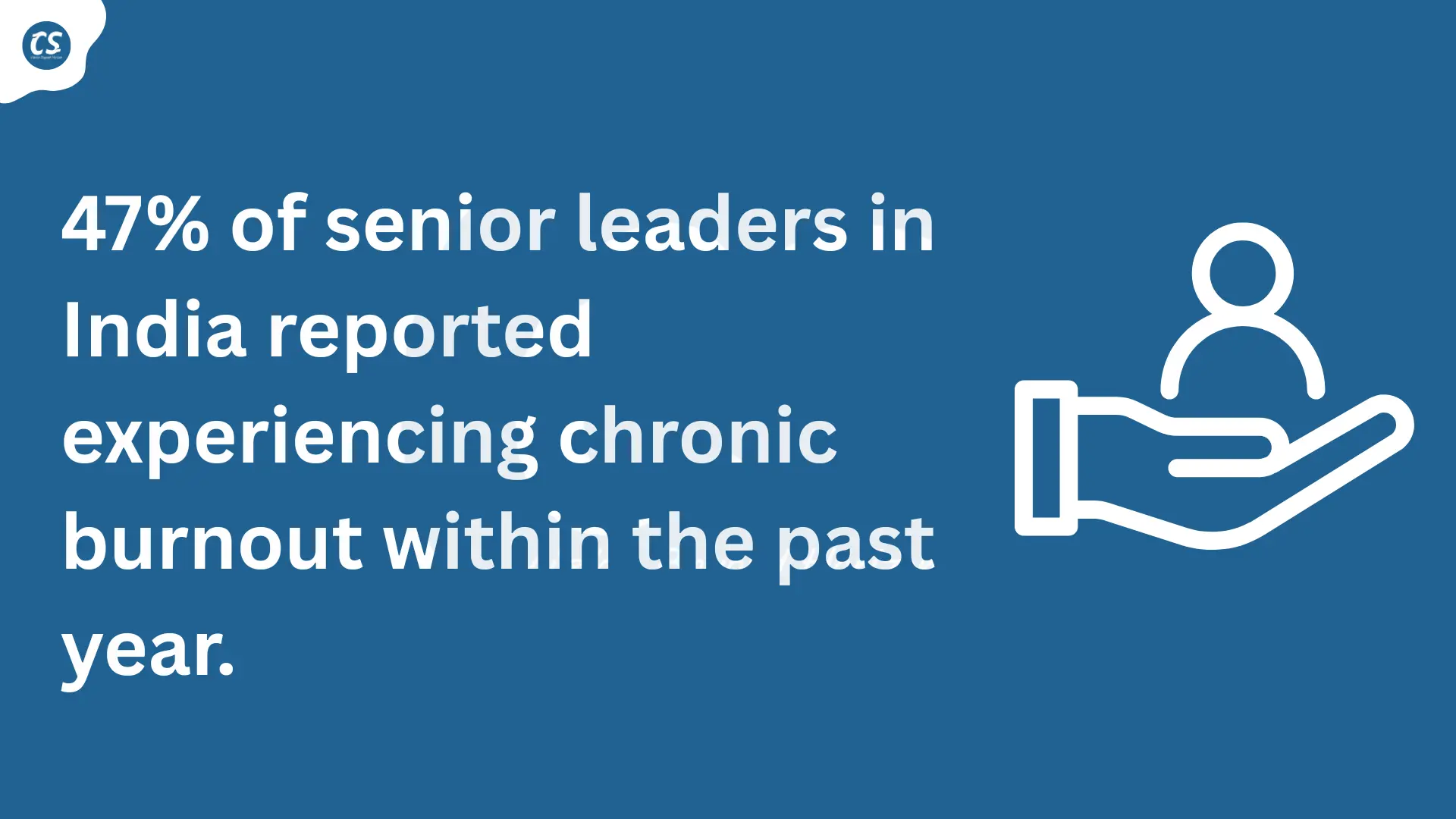
Even with rising executive compensation, mental exhaustion is driving many to pause or pivot. In a recent survey by Deloitte, 47% of senior leaders in India reported experiencing chronic burnout within the past year.

3. The rise of “what’s next” thinking

Many CXOs today are asking a different question: what’s next for me? Startups, advisory roles, and independent projects now offer them more freedom and control than a corporate title ever could.  

For some, stepping away isn’t a setback. It’s a chance to design work on their own terms. 

The Cost of a Leadership Exit 

When a CXO leaves, the real cost is in the disruption of direction… the ripple that travels from boardrooms to teams and even the market. Whether it is about the leadership retention in India or abroad, the senior person’s exit hits the same.

High churn at the top often leads to: 

  • Loss of investor confidence, especially in high-growth or listed firms. 
  • Drop in team morale, as employees question organisational stability. 
  • Stalled transformation, since new leaders often reset priorities. 

According to EY’s India Workforce Report (2025), every senior leadership exit can cost a company up to 213% of the executive’s annual salary, once you include lost productivity, hiring time, and culture readjustment. 

It means leadership retention is a strategic KPI that you can use to uplift your business. 

What Organisations are getting wrong 

Retention at the CXO level requires more than a pay raise. Yet, most organisations still treat it that way. Here’s where they go wrong: 
  • Undefined mandates: When goals and authority aren’t aligned from day one, leaders disengage early. 
  • Weak cultural onboarding: Even experienced CXOs need orientation, not systems, but to the company DNA. 
  • Overpromised growth stories: Many leaders join with inflated expectations about freedom, resources, or impact. When reality doesn’t match, exits accelerate. 

In short, clarity beats compensation.  

What future-ready Companies are doing differently

leadership retention strategy

Smart organisations in India are realising that leadership retention is built before Day 1. They’re focusing on three shifts:

1. Rewriting the leadership contract

Beyond the offer letter, companies are co-creating success blueprints with their incoming leaders, defining not just KPIs but shared non-negotiables like decision rights, growth visibility, and cultural expectations.

2. Investing in leadership wellness

From coaching and mentoring to short breaks and mental health support, companies are finally valuing a leader’s energy as much as their results.

3. Aligning vision

Retention improves when a leader’s personal vision aligns with the company’s mission. This is where leadership recruiters in India are playing a more strategic role. They are matching values, not just resumes. 

“You can’t retain leaders by holding them back. You retain them by giving them purpose, trust, and space to grow.” 
Amit Sidana, Corporate Stalwarts 

A Shift from Hiring to Holding 

In leadership, hiring is easy. But retaining it is hard. In 2026, the companies that can retain people are the ones that are going to win. 

So, the question hiring managers should now ask isn’t “Who do we hire next?” It’s “What will make them stay?” 

Because every exit tells you something about the culture that pushed them out, and every retention story tells you what’s worth building more of. 

What this moment demands 

The CXO exit wave is more than a headline. It is a sign that leaders are thinking more humanely. Purpose, autonomy, and alignment are no longer optional at the top; they’re survival essentials. 

If you’re a founder or board member who is focused on leadership retention in India, pause your next big hire. Ask your leadership team not what drives performance, but what sustains them. 

Because the future of leadership won’t be defined by who leads next but by who chooses to stay. 

And if you’re rethinking your own leadership retention strategy, 👉 book a consultation with our team to explore how to build stability at the top before the next transition begins. 

Share this article

Related Articles

Browse the latest career advices

Cost of Employee Attrition and Replacement: Why It’s Double the Salary You Pay
Here’s something most leadership teams get wrong about the cost of employee attrition and replacement. They see someone earning ₹30 lakhs resign. They think, “We’ll hire someone new at ₹30...
Top 5 Leadership Hiring Trends Shaping India’s C-Suite Market
India’s C-suite is no longer defined by experience alone. It’s defined by adaptability. Across industries, from manufacturing to pharma, renewables to technology, companies are reshaping what they expect from leadership....
Why Emotionally Intelligent Hiring Defines the “Right Fit”
Have you ever met someone brilliant at their job but suddenly “not themselves”? That’s often where emotionally intelligent hiring makes all the difference.  During one of his corporate leadership training...
Why Emotional Intelligence in Leadership Matters
When it comes to leadership, technical skills open the door, but emotional intelligence keeps it open.  That was the focus of a recent conversation between Amit Sidana, founder of Corporate...