
Loading...

AI in Recruitment: Can Technology Improve Executive and CXO Hiring in India?

AI in recruitment is reshaping leadership hiring in India, but the challenges on the ground remain tough. Whether you’re searching for a CXO in Pune or building a GCC team in...
AI in Recruitment: Can Technology Improve Executive and CXO Hiring in India?

AI in recruitment is reshaping leadership hiring in India, but the challenges on the ground remain tough. Whether you’re searching for a CXO in Pune or building a GCC team in Bangalore or Dubai, the pressure is relentless, and every hiring mistake is expensive. Even the most diligent recruiters end up buried in spreadsheets, slow CRMs, and long email chains that rarely lead to fast results. 

Despite growing adoption of technology and unprecedented access to talent data, the reality is harsh: 80% of Indian employers are struggling to find candidates with the right skills, making talent scarcity a defining challenge across all sectors. (Financial Express 

This persistent skills gap is especially acute for executive and leadership roles where specialized expertise is essential. The impact? Prolonged hiring cycles, increased competition for skilled leaders, and elevated risks of costly mis-hires. 

The real question is, can AI solve persistent issues like overlooked leaders, bias, slow hiring cycles, and costly mis-hires for senior roles, or is it just another layer of complexity? This article tackles the reality, not just the promise, and shows what it really takes to succeed with AI in leadership hiring in India.


What is AI in recruitment?
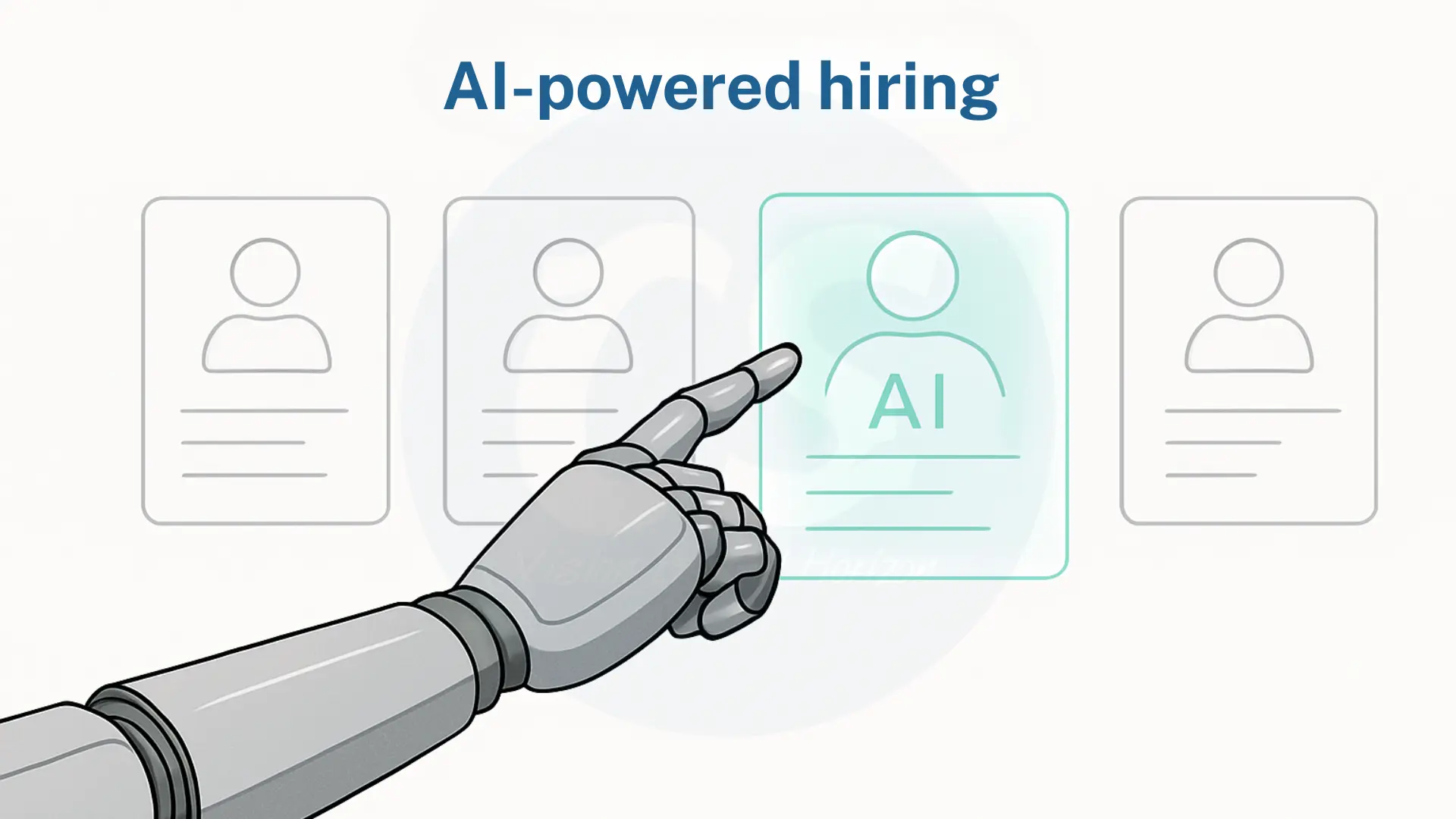
AI robotic hand showing human screening

AI in recruitment now means much more than just filtering resumes or setting up interview slots. 

  • 35–45% of organizations have adopted AI in hiring (SHRM). 
  • 85% of employers using AI report improved efficiency (SHRM). 
  • 75% of companies are expected to use AI-powered hiring platforms by 2026 (Gartner). 

Today’s systems use natural language processing, predictive analytics, and deep learning to read between the lines of every application. These algorithms go beyond surface-level skills—they learn from the track record of your most successful placements, mapping patterns in experience, leadership qualities, and results that impact business outcomes.

For recruiters and HR leaders, this tech brings new transparency: “What made our top leader excel?” can be answered with real data.

How is AI shaping leadership hiring in India in 2025?

In 2025, AI is present at every meaningful step of senior and executive recruitment in India. It automates the search for high-potential leaders, ranks profiles based on nuanced signals like transformation projects or cross-industry results, and even flags those hard-to-spot stars with the potential to lead change. 

AI doesn’t just shortlist by keywords—the best solutions scan for unique achievements, career journeys, and successful leadership examples, so your team can act faster, defend their recommendations with real evidence, and focus on hiring strategies instead of manual screening (Forbes). Still, AI is no magic bullet; its power is realized only when paired with strong market knowledge and a willingness to question automated “perfect matches.” 

For organizations competing in major talent hubs, leveraging AI is especially crucial. If you’re hiring in a highly competitive region, see our list of top 10 recruitment agencies in Bangalore or top 10 job consultants in Delhi NCR for trusted local support. 

How AI in recruitment can power up your Recruitment Tools in India

You don’t need a total overhaul to get AI working for you—most Indian recruiters already use CRM, LinkedIn, ATS, Excel, and Google. The difference now is in knowing how to supercharge these familiar platforms with artificial intelligence. Instead of simply relying on built-in features, AI lets you automate key tasks, surface better candidates, and draw sharper insights to keep your executive search ahead of the curve. Here’s where the real upgrades happen—tool by tool. 
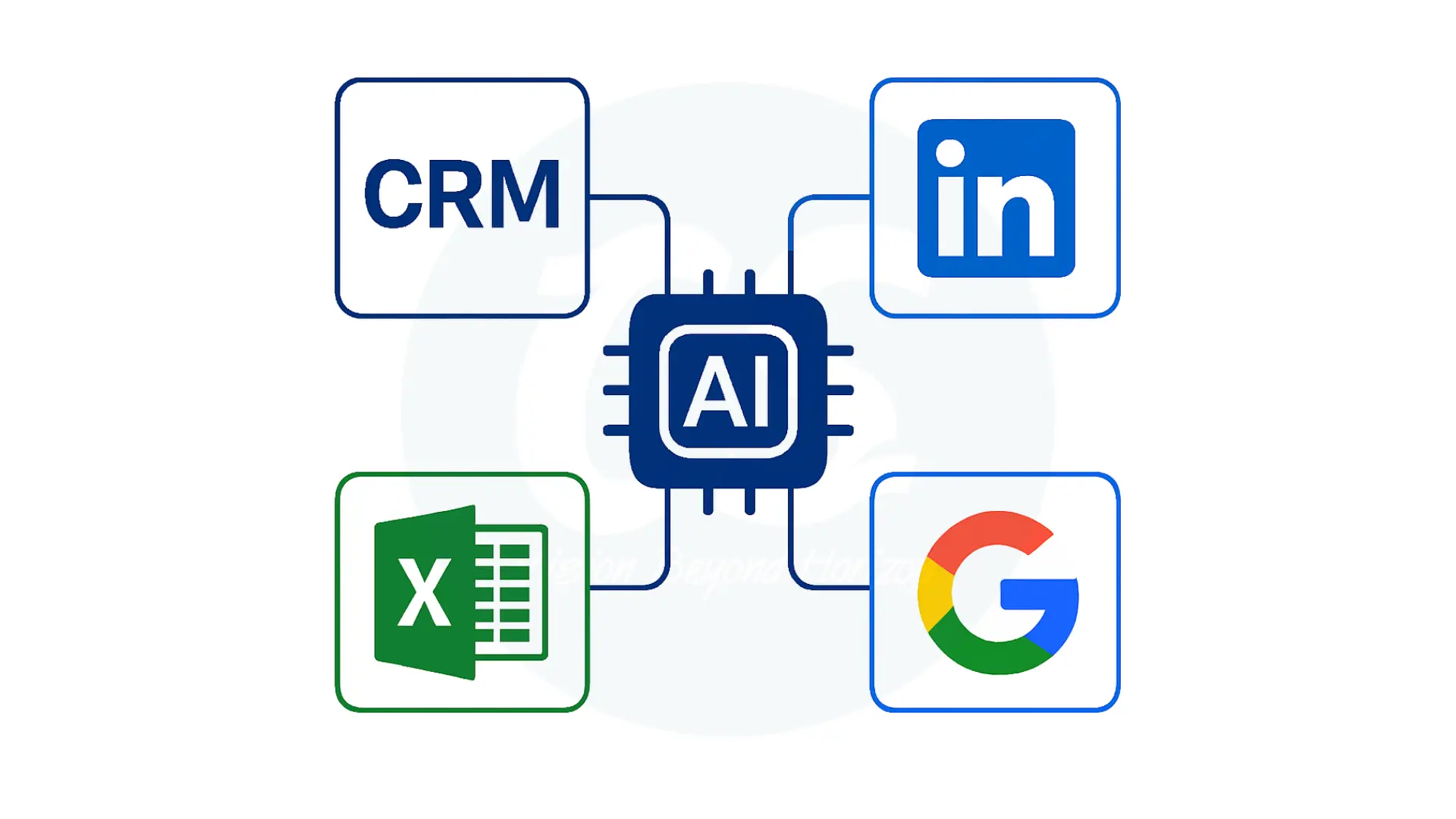
A montage of icons of CRM, linkedIn, excel, google interconnected AI by corporate stalwarts

How can you use AI to optimize your CRM for leadership hiring?

Your CRM should be more than a database with AI; it’s a decision-support engine for executive search. Modern CRMs embedded with AI can instantly scan your talent pool and flag candidates by matching their competencies against live leadership hiring requirements in India. 

  • Automated Candidate Matching: AI matches top executive talent to leadership roles faster and more accurately. 
  • Predictive Analytics: AI predicts which senior leaders are open to new roles to speed up hiring. 
  • Personalized Communication: AI-powered emails and reminders keep CXO candidates engaged and reduce dropouts. 

How does AI transform LinkedIn into a source of executive talent

LinkedIn has long been the goldmine of senior talent, but it’s the AI-powered features that unlock real value. Today, search is not about typing in a fancy job title; it’s about letting machine learning algorithms highlight leaders whose accomplishments or interests align with your specific mandate (think: someone who’s helped grow startups from scratch, perfect for a COO role in Mumbai). 

  • AI Sourcing: Uses algorithms to surface top executive talent for relevant leadership positions in India. 
  • Talent Insights: Provides real-time analytics on CXO candidates and leadership pipelines for smarter hiring decisions. 
  • Personalized Outreach: LinkedIn’s messaging tools automate and tailor executive engagement to improve response rates. 

How can you improve recruitment analytics with AI in Excel? 

Most hiring still runs on Excel, but now you can push its limits with AI-powered analytics. Plug-ins and cloud AI services let you:

  • Data Management: Organizes and filters executive talent pools efficiently for quick access. 
  • Candidate Tracking: Customizable spreadsheets track candidate progress through each stage of the leadership recruitment process. 
  • Analytics & Reporting: Visualizes key hiring metrics, helping recruiters monitor and refine executive search strategies. 

The aim is not just to create prettier charts but to be smarter and more competitive about decision-making clarity. 

How can Google Search and Boolean tools amplify your leadership sourcing with AI? 

Don’t underestimate the power of Google. AI-enabled Boolean string builders like ChatGPT expand search reach far beyond LinkedIn, capturing CXOs who may frequent niche forums, alumni networks, or professional blogs. 

  • Boolean Search: Google’s advanced search operators identify hidden leadership talent across platforms. 
  • Google Sheets Collaboration: Enables real-time updates and sharing of executive candidate data with the hiring team. 
  • Calendar Automation: Google Calendar automates interview scheduling to streamline the executive hiring workflow. 

This is modern headhunting, but better. 

How do you integrate AI with ATS for a seamless leadership hiring process? 

AI isn’t an extra layer on your ATS; it fundamentally reshapes the process. An ATS with strong AI should:

  • Score & Rank CXOs: AI evaluates leadership skills and red flags, and highlights top executive talent. 
  • Chatbot Screening: Automates early CXO screening and FAQs to speed up the process. 
  • Workflow Insights: Tracks forget.” Internal best practices demand continuous review and tweaking, especially for nuanced executive roles (BCG). 

How does artificial intelligence improve recruitment efficiency? 

AI removes manual tasks like screening, scheduling, and follow-ups so recruiters can focus on high-impact decisions. 

In leadership hiring across India, this results in clear benefits. Companies report up to 50 percent faster shortlisting for senior roles. AI tools also surface hidden executive talent who may not be active on job boards but fit the role perfectly. 

With data guiding every stage, hiring becomes faster and more focused. It’s not just about speed. It’s about better decisions and stronger outcomes. 

Can AI reduce bias in the hiring process? 

an image of a robotic hand and human hand trying to meet each other, showing a connection between hiring by corporate stalwarts

Yes, when applied with care and regular checks. 

AI evaluates candidates based on skills, outcomes, and relevance, not names or backgrounds. Features like bias detection, anonymous screening, and regular audits help reduce bias in leadership recruitment.

For Indian executive hiring, this means fresh pathways into roles that were often limited to familiar networks or elite schools. But AI is not foolproof. The most effective companies combine technology with human judgment to ensure fair, informed decisions every time (SHRM). 

How does AI in hiring transform candidate experience and engagement? 

When it comes to leadership hiring, senior candidates expect a process that’s both swift and respectful of their time. AI-powered recruitment has dramatically raised the bar for candidate experience and engagement at this level. Now, automated systems keep candidates updated at every stage, sending instant confirmations, sharing timely feedback, and providing clear next steps, so those dreaded periods of “radio silence” disappear from the executive search journey

The process becomes personalized as well, with AI-driven insights tailoring every interaction with the individual, offering relevant information, role previews, or content that speaks directly to the candidate’s experience and interests. For busy CXOs and senior leaders, video-based AI assessments add a layer of flexibility: they can showcase their skills and approach on their terms, while AI efficiently screens and highlights the candidates who stand out, speeding up scheduling and decision-making for all involved. 

How do you implement AI for leadership hiring in India? (Step-by-Step) 

a recruiter screening candidates through AI

Getting real value from AI in recruitment means much more than buying new software. You need a smart, methodical approach—one grounded in clear goals, the right tech fit, and continuous improvement. Here’s a practical, step-by-step path for rolling out AI within your executive and leadership hiring process:

Step 1: Define your leadership hiring priorities

  • Decide what you want AI to improve: speeding up CXO placements, boosting shortlist diversity, increasing retention, or reducing bias. 
  • Align with business and stakeholder goals: What does a successful leadership hire mean for your organization? Time-to-hire, on-the-job performance, or impact on company culture? 

Step 2: Choose and integrate the best-fit tools

  • Evaluate your options: Which CRM, ATS, sourcing automation, and analytics platforms play well together and support “AI in recruitment” for leadership roles? 
  • Ensure your chosen tools fit data privacy laws and integrate smoothly with existing systems. 
  • Prioritize features like AI matching, predictive analytics, automated shortlisting, and strong reporting. 

Step 3: Upskill your hiring team & leadership stakeholders

  • Train recruiters, TA partners, and hiring managers so everyone understands both the tech capabilities and their limits. 
  • Share real-world use cases—why AI scores candidates in a certain way, how to interpret those rankings, and where human intervention is vital. 
  • Set up a feedback loop so leads, panelists, and even candidates can flag issues or highlight AI successes. 

Step 4: Start small with strategic CXO hires

  • Start with a handful of C-suite mandates or critical mid-senior positions to test your revamped process. 
  • Monitor for “false negatives” (great candidates filtered out), and track time-to-hire, response rates, and feedback on both the process and results. 
  • Adjust criteria, AI settings, or recruiter review steps based on actual outcomes. 

Step 5: Audit, monitor, and refine 

  • Conduct quarterly audits for bias, accuracy, and overall performance across every step of your AI recruitment process, especially executive hiring, where the stakes are highest. 
  • Check for compliance with Indian laws and keep all documentation thorough for transparency. 
  • Continually update data sets and tweak your workflows to reduce errors and maintain decision clarity. 

Step 6: Build a continuous feedback & improvement loop

  • Collect regular input from placed executives, hiring managers, and rejected candidates: Was the process fair, clear, and respectful? 
  • Use data insights to refine job descriptions, outreach, and even negotiations—so every hiring cycle has improved over the last few years. 
  • Share learnings with leadership, showing exactly how “AI in recruitment” is delivering tangible impact on your business goals. 

A systematic, step-by-step implementation assures you are making smarter, faster, and fairer hires, building real trust and measurable value in leadership hiring in India. 

What are the risks and legal challenges of using AI for executive recruitment? 

AI’s speed and reach invite risk. 

  • Privacy: Data must be managed per data laws (and, for GCC hiring, international frameworks). 
  • Explainability: Candidates and clients expect clear reasons for any shortlist or rejection, especially at the executive level. 
  • Automation Trap: Don’t rely solely on the tech; experienced review is essential to spot “diamond in the rough” candidates who get missed. 
  • Bias & Compliance: The ultimate responsibility for fair, legal hiring sits with you, not the software. 

Proactively mitigate these risks by keeping AI processes transparent, documented, and subject to review (more on avoiding costly mistakes). 


Related: If you’re seeking proven solutions for executive and CXO recruitment, explore our dedicated Leadership Hiring Services. 

What is the ROI of adopting AI in recruitment, and is it worth it? 

Adopting AI in recruitment delivers measurable results for leadership hiring in India—both for your business and your employer brand. Companies are seeing significantly faster hiring cycles for executive roles, more accurate candidate matches leading to better retention, and a boost in diversity as a wider range of qualified leaders progress through the process.  

At the same time, AI-driven efficiencies help organizations stand out as innovative employers and consultancies, enhancing their reputation in increasingly competitive talent markets. For industries and cities where the competition for top leadership is intense, these benefits directly translate to stronger business outcomes and long-term gains. 

  • Time-to-hire drops 40–50% 
  • Better candidate quality and fit 
  • Higher retention, fewer mis-hires 
  • Increased diversity in hiring 
  • Enhanced employer and consultancy brand 

How to combine AI and Human Expertise for leadership hiring in India 

Getting the best results in leadership hiring isn’t about picking AI over people; it’s about using both

Here’s how a smart blend works, in a straightforward, easy-to-follow way:
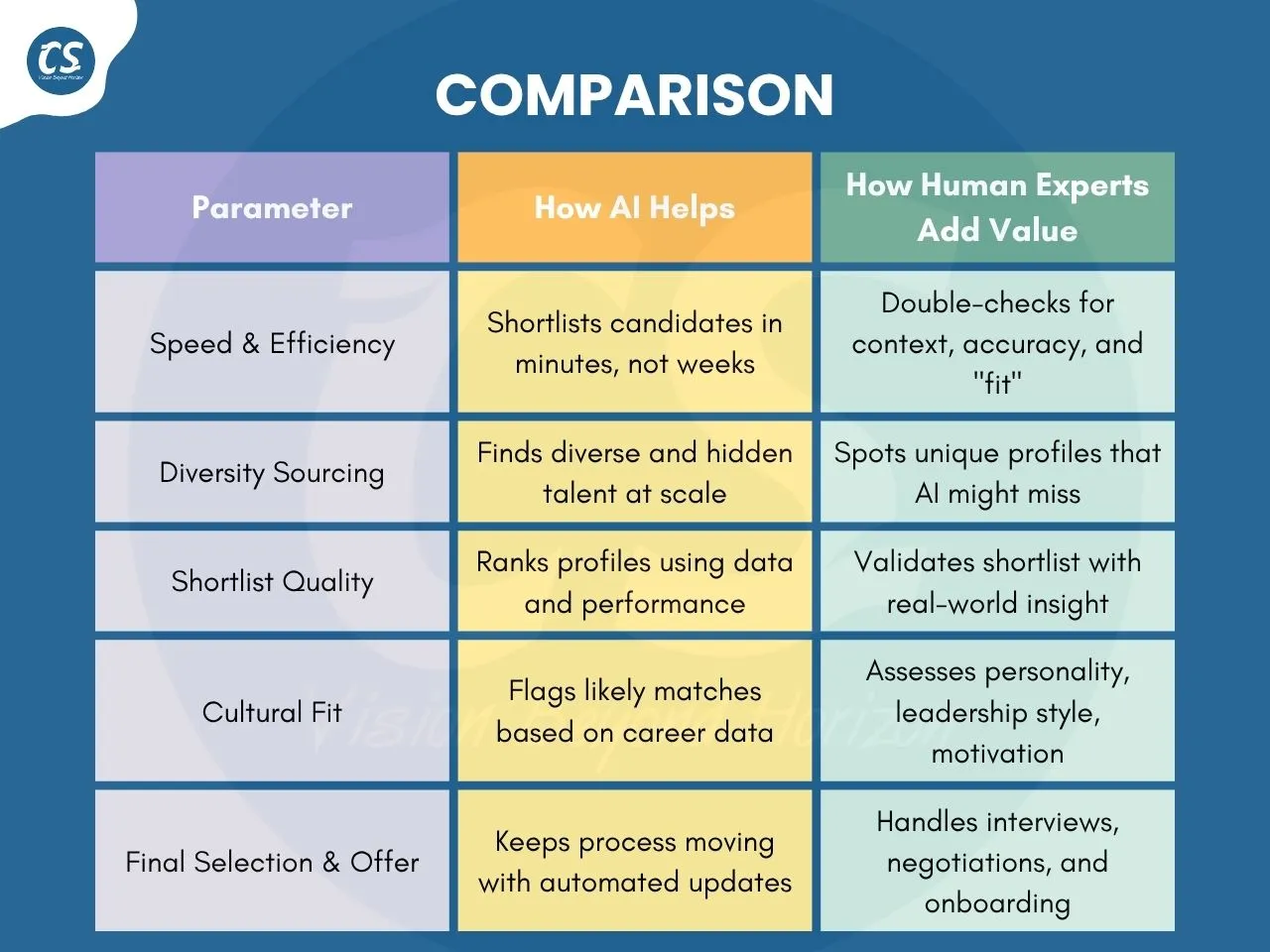
Comparison table between AI hiring vs human hiring by Corporate Stalwarts

Tip: Use AI for the heavy lifting. Let experienced recruiters make the final call. This balance gives your hiring the edge in today’s market and makes your process strong, fair, and reliable. 

Real-World impact and case studies  

A Mumbai-based FMCG cut its CEO hiring cycle by 70% using AI-driven video assessments and predictive analytics—achieving greater team diversity and improved attrition. Similarly, a tech firm expanding into Dubai synchronized its ATS, CRM, and LinkedIn searches with AI, rapidly filling GCC leadership roles with stronger candidate fit and faster onboarding. These aren’t anomalies—they reflect a wider trend where AI-backed strategies are driving a measurable edge for ambitious Indian organizations (GCC hiring tactics). 

Related: Find out how our services have helped organizations achieve similar results. 

Conclusion: The next step for leadership hiring in India 

AI in recruitment is already changing the game for leadership hiring in India. It saves time, brings better leaders to the table, and helps you avoid classic hiring mistakes

But real results come when tech is combined with sharp human judgment and regular process checks. If you want faster, fairer, and more reliable CXO or GCC hiring, now is the time to rethink your approach. 

Looking for practical ways to get started or want to strengthen your next executive search? Explore our Leadership Hiring Services for solutions that deliver results. 

The FAQ

Frequently Asked Questions

Many teams fail to regularly audit AI processes, rely too much on automated filters, or overlook communicating with candidates—leading to missed talent and weaker engagement.

Use AI for fast sourcing and screening but depend on experienced recruiters for interviews and judging culture or leadership fit.

AI is great for building executive shortlists, but human expertise is essential for assessing strategic vision and cultural alignment at the top level.

Risks include weak data security or not clearly informing candidates how their personal information will be used and stored.

Track changes in time-to-hire, acceptance rates, diversity, and satisfaction before and after implementing AI to measure its true value.

Share this article

Related Articles

Browse the latest career advices

Top 5 Leadership Hiring Trends Shaping India’s C-Suite Market
India’s C-suite is no longer defined by experience alone. It’s defined by adaptability. Across industries, from manufacturing to pharma, renewables to technology, companies are reshaping what they expect from leadership....
Why Emotionally Intelligent Hiring Defines the “Right Fit”
Have you ever met someone brilliant at their job but suddenly “not themselves”? That’s often where emotionally intelligent hiring makes all the difference.  During one of his corporate leadership training...
Why Emotional Intelligence in Leadership Matters
When it comes to leadership, technical skills open the door, but emotional intelligence keeps it open.  That was the focus of a recent conversation between Amit Sidana, founder of Corporate...
Leadership Retention in India: The Rising CXO Exit Wave
Every time a CXO quits, a company doesn’t just lose a leader; it loses a version of its future. Yet across India, more top executives are walking out mid-strategy than...