

Loading...

How Would You Describe Yourself? The Answer That Gets You Hired

If you’re preparing for interviews, I guarantee that the question, “How would you describe yourself?” will inevitably come up, whether you’re a recent graduate or a mid-career professional. Most people...
31/07/2025
How Would You Describe Yourself? The Answer That Gets You Hired

If you’re preparing for interviews, I guarantee that the question, “How would you describe yourself?” will inevitably come up, whether you’re a recent graduate or a mid-career professional. Most people hear it and either go blank or start repeating what’s already on their resume. Trust me, as someone who’s spent over ten years in recruitment and talent acquisition, there’s no need to panic. The way you answer can immediately set you apart from everyone else in the waiting room

Answering this question is your chance to show the interviewer who you are and what you’ll bring to the table, especially if you’re applying in industries like building materials, paint, cement, FMCG, pharma, or automobiles, where every employer is sizing up not just what you know, but how you’ll fit. So, let’s talk about how to describe yourself with the confidence and precision that makes hiring managers remember you.


What Are Interviewers Hoping to Hear When They Ask, “How Would You Describe Yourself?”

Diverse candidates waiting, modern interview, how do you describe yourself

Here are some insights from the perspective of a recruiter: When I ask candidates how they would describe themselves, what I’m looking for is more than just a list of adjectives. I want to know:

  • Do you see yourself, your true strengths, and maybe even an area you’re keen to improve?
  • Can you relate your story to what my company genuinely needs, rather than just spouting words?
  • Are you authentic? I’d rather hear “I’m the one who gets the team organized for the big deadlines” than the vague “I’m a good leader.
  • And of course, can you communicate your story in a way that’s concise, confident, and easy to remember?

Honestly, the strongest candidates aren’t perfect. They’re the ones who know how to sell themselves authentically. Before you walk into any interview, make sure your resume sparks enough curiosity to get you in the door, and then let your answer do the rest.

The Only Structure You’ll Ever Need: The “Present–Past–Future” Formula
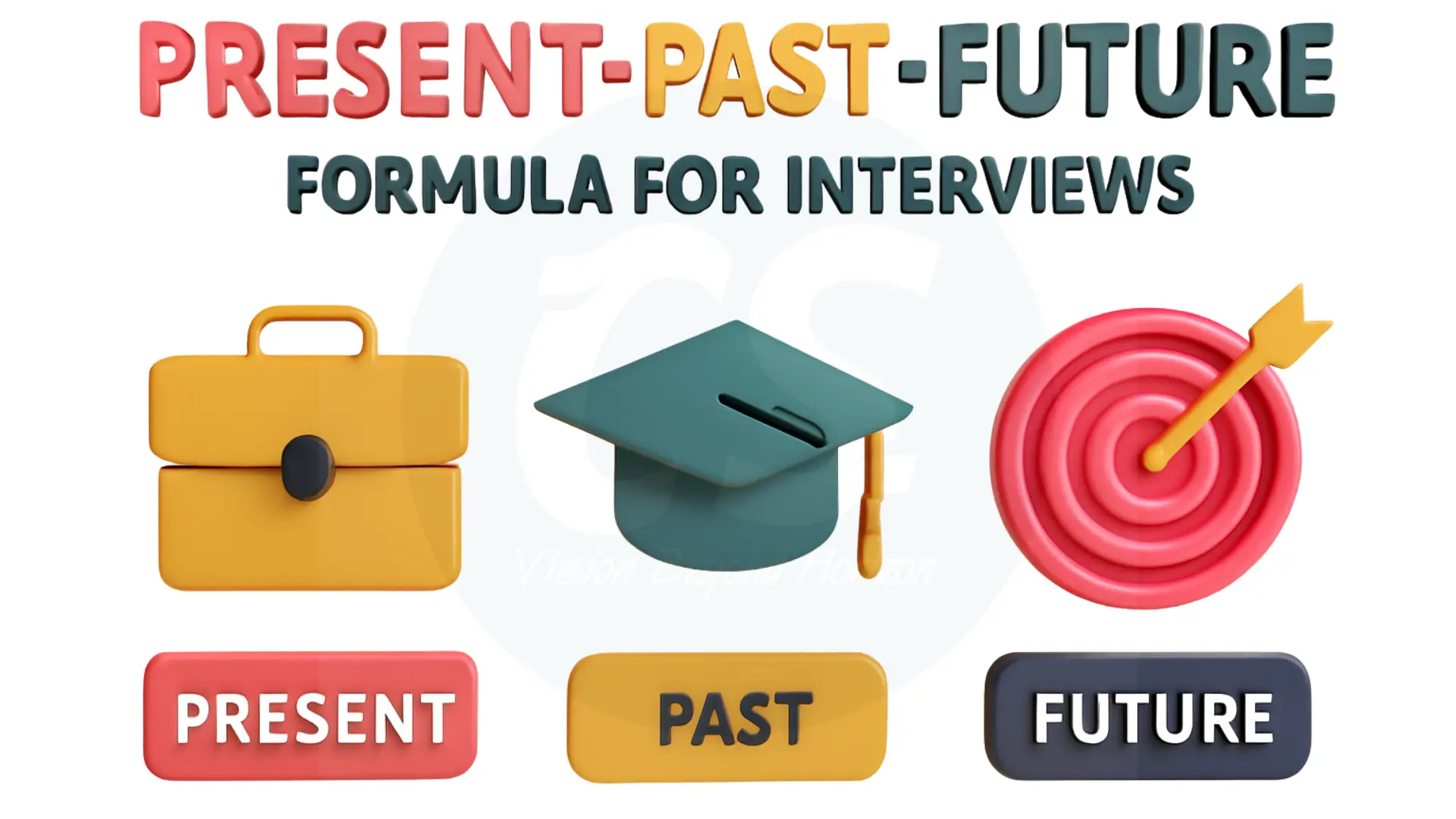
3D icons, Present–Past–Future interview formula, how do you describe yourself

Let’s simplify this fundamental question. If you follow this approach, you never have to worry about rambling.

Start with your present.

Who are you today? This could be your current role, what you’re known for at university, or even a standout quality in your recent internship. 

Briefly touch on your past.

How did you get here? Pull in one achievement, project, or lesson from your past work or studies that’s relevant to the job.

Connect it to your future.

What about this company or sector excites you and matches what you want to achieve?

Let’s see how you would describe yourself using this formula, tailored by industry:

– Building Materials & Cement  

“I’m genuinely detail-oriented. I’ve spent the past year as a quality control trainee in the cement production industry, where even minor mistakes can result in thousands of dollars in costs. During my engineering internship, I led a workflow improvement that reduced material waste. Now, I want to take what I’ve learned about cost savings and reliability and bring it to a team that values sustainable construction.”

– FMCG 

“As a recent graduate, I stepped up to coordinate a student-led product launch for an FMCG startup, juggling timelines, budgets, and customer insights all at once. That project made me realise how much I love translating data into quick, effective decisions. Working with your brand is the future I want, where analytics meets creativity every day.”

– Pharma  

“I have a solid grounding in pharmaceutical sciences, and my academic research taught me to never compromise on compliance or quality. I once uncovered a process error just before a key submission, avoiding almost certain rework. For me, the next logical step is a company that values integrity and wants someone thorough.”

– Automobile 

“My background in mechanical engineering, topped off by a high-pressure internship at a car manufacturer, has made problem-solving second nature to me. I led a project that reduced assembly line downtime by 12%. Today, I’m eager to join a brand where innovation and practical improvements go hand in hand.”


Wondering how you describe yourself if you’re switching fields? Always look for your transferable strengths; perhaps communication skills from FMCG will help in building materials, or your process mindset from cement will be a valuable asset in the pharmaceutical industry.

For more help, look at practical job search strategies that will help you target roles where your story just “clicks.”

What to Do and Not Do When Describing Yourself 
Notecard with “Do’s and Don’ts”, how do you describe yourself

From where I sit as a recruiter, here’s what works best:

Be specific. Rather than saying, “I’m a quick learner,” describe an instance in which you quickly picked up new information and the consequences that resulted. 

Stay focused. Keep your story under two minutes. The shorter and clearer, the better the impression. 

Don’t rattle off adjectives. “Dedicated, driven, reliable…” Everyone says this, but stories are what stick.

Avoid long and off-topic stories. Stay relevant to the job you’re interviewing for.


If you want to brush up on your approach before a virtual or in-person interview, my team has put together clear interview preparation insider tips and guidance on winning online interviews.

How Would You Describe Yourself? — Industry and Candidate FAQs Answered  

As a candidate, you’ve probably googled some variation of “how to describe yourself” more than once. Here are the most common queries I’ve seen:

What are the best words to describe yourself for building materials or cement roles?

Highlights include being detail-oriented, safety-conscious, analytical, and a team player. Back up every descriptor with a real-life scenario; for example, how your approach cut costs, improved quality, or enhanced safety. That’s what hiring managers in these industries notice.

How would you describe yourself in FMCG interviews as a fresher?

Show adaptability and eagerness. If you spearheaded a campus project, worked on a short deadline, or learned customer insights quickly, tell that story. Companies value individuals who can quickly learn and adapt to changing situations.

How would you describe yourself for a pharma interview?

Accuracy and responsibility are respected above all. Relate an example; maybe you caught a mistake in lab results, or you upheld compliance even under pressure. 

What’s an excellent approach for paint or coatings companies?

Focus on creativity and process discipline. Was there a technical challenge where you collaborated with different teams to find a solution? Use that.

What if your background is in the automobile sector?

Use your hands-on experience, problem-solving, technical skills, and your impact on process efficiency or quality improvements.

What are some dos and don’ts for freshers describing themselves?

Do prepare a short, truthful story from your college or internship days; show what you learned and how you contributed. Avoid using blanket terms (“hardworking,” “passionate”) without substantiation.

How would you describe yourself when switching industries?

Lead with your core skills, such as project management, communication, and analytical thinking, and match them to what the new field values. Give an example from your past that translates to your future company’s needs.


If you want to see what strong answers look like in action, Indeed’s interview guide and these practical scenarios from Career Sidekick are excellent references. 

Final Thoughts: Your Story, Your Strategy  

When preparing to describe yourself, strive for honesty, clarity, and a genuine alignment between what you’ve done and what you aspire to do next. Treat every interview as a conversation, not an interrogation.

The goal is to let the interviewer envision you in the role, not just because of what you’ve accomplished, but also because of who you are now and what you’re striving for. The correct answer is about being a natural fit for the team and the job. If you want personalised, recruiter-level feedback, don’t hesitate to submit your CV directly to our team for a confidential review. Sometimes a fresh set of expert eyes makes all the difference.

If you’re curious about more career options or want to see how recruitment could be the best step for you, our career portal and insights about recruitment as a top career move are the best places to start.

So next time someone asks this question, speak honestly, tell your story clearly, and show them why you’re the standout candidate they’ve been looking for. 

Share this article

Related Articles

Browse the latest career advices

What Indian Companies Look for in Senior Leaders?
You’ve heard it before: companies want leaders. But the real question is sharper is ‘what traits define effective leadership now?’  Over the last few years, executive hiring has changed faster...
How to Prepare for Virtual Leadership Interviews in GCCs
India’s GCC growth story India’s GCC ecosystem is scaling at a pace the world hasn’t seen before. Nearly half of all global capability centres now operate from India, with 2–3...
The Importance of Skills-Based Hiring: Why Experience Is No Longer Enough
What’s more valuable: 10 years of experience or 10 in-demand skills? Sundar Pichai’s words resonate across the industry: “Skills are the new currency in the digital age.” As we navigate...
14/12/2023
The Essential Fast Job Search Secrets You Need To Know
Job applications, rejections, and endless waiting. If you also find yourself stuck in the above maze, then this article is for you. The frustration, the impatience while hunting for a...