
Ask any professional in India today what matters most in a job, and the answer comes quickly: a sense of balance.
Not just salary, not just title… but the space to grow at work without giving up life outside it.
Surveys in 2024 showed something unique: Indian employees and employers were more satisfied with hybrid work than their global peers. It means hybrid work culture is being embraced, not tolerated. For India’s 600 million–strong workforce, it’s becoming a way of life, especially in IT, education, and consulting.
But balance doesn’t come by default. It needs boundaries, routines, and leadership that respects both work and life.
This article answers the 15 most-asked questions about hybrid work-life balance in 2026: what this mixed culture really means, where it goes wrong, and how you, your manager, or your company can make it work.
Table of Contents
Toggle1. What is hybrid work-life balance, and why is it important?
It’s where your career and personal life finally stop pulling in opposite directions. Hybrid work-life balance means you can give your best at work and still make it home in time for dinner.
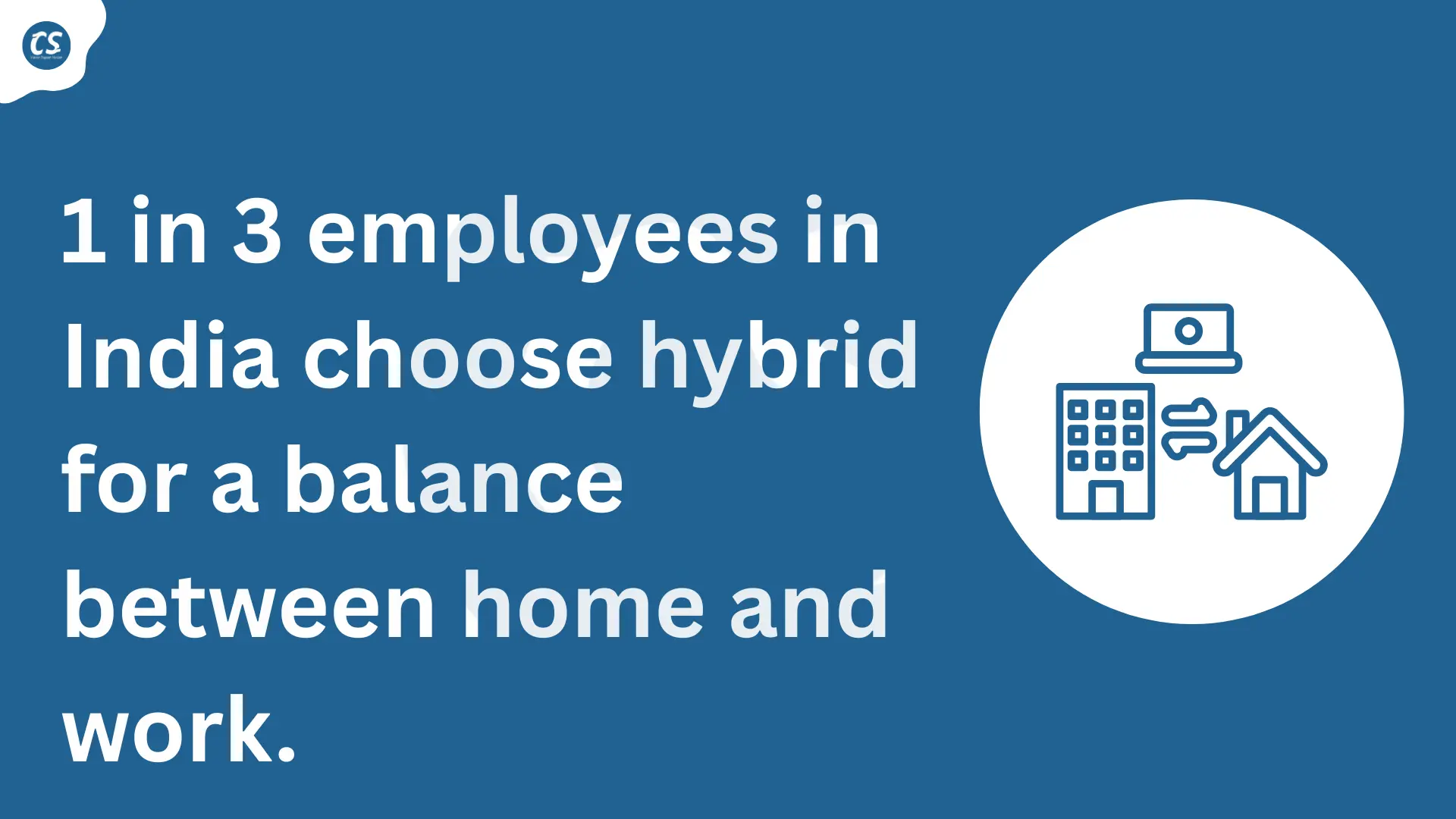
In India, 36% of employees already work hybrid because it eases commute stress, improves focus, and gives them space to live more meaningfully.
Remember, it’s not about doing less at work. But doing what matters, without losing yourself in the process.
2. What are the main types of hybrid work models?
Most companies use one of three setups:
- Fixed days: e.g., 3 office + 2 remote
- Flexible choice: you decide your office days
- Role-based: depends on function (sales in-office, tech remote)
If you’re interviewing for a job role, don’t skip this question. The model defines whether a hybrid feels liberating or restrictive.
Related: The Essential Fast Job Search Secrets You Need To Know
3. How do I separate work and personal life when working hybrid?
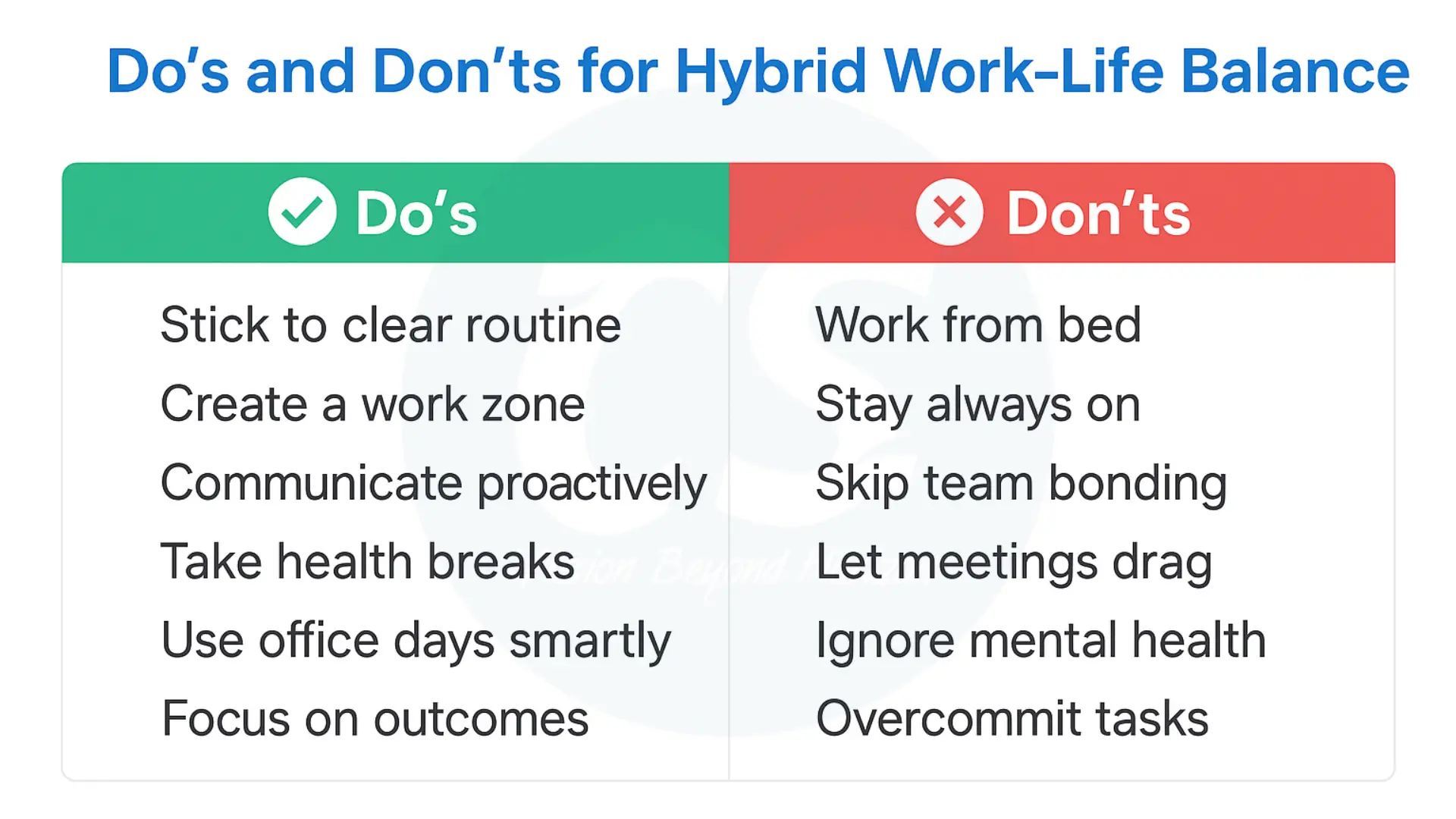
Boundaries are non-negotiable. Try this:
- Shut the laptop and step away at a fixed hour
- Use one device for work and another for personal use (if possible)
- Block “no-meeting hours”
Being always online doesn’t make you efficient, but invisible to yourself.
4. What routines boost productivity and well-being in hybrid roles?
Start mornings with your most challenging tasks. Keep calls short. Add micro-breaks: stretch, hydrate, and check in with family.
Companies report up to 72% productivity gains with hybrid, but those numbers only hold when individuals set routines. Without discipline, flexibility becomes messy.
5. What’s the best way to set up a home workspace for hybrid working?
A desk and chair beat working from your bed. Good lighting, a laptop stand, and even a plant change your focus.
Think of it this way: you spend hours here. If the setup hurts your back or strains your eyes, your productivity will pay the price.
6. How many days a week do people usually work from home in hybrid jobs?
The sweet spot is 2–3 days remote. More, and people miss collaboration; less, and commuting frustration returns.
If your company is rigid, negotiate. A hybrid only works when it flexes both ways.
7. What technology helps collaboration and balance in hybrid teams?
The tools are simple: Teams, Slack, Trello, and Notion. The trick is how you use them.
Mute noisy channels, set status updates, and switch off after hours. Tech should reduce chaos, not create it.
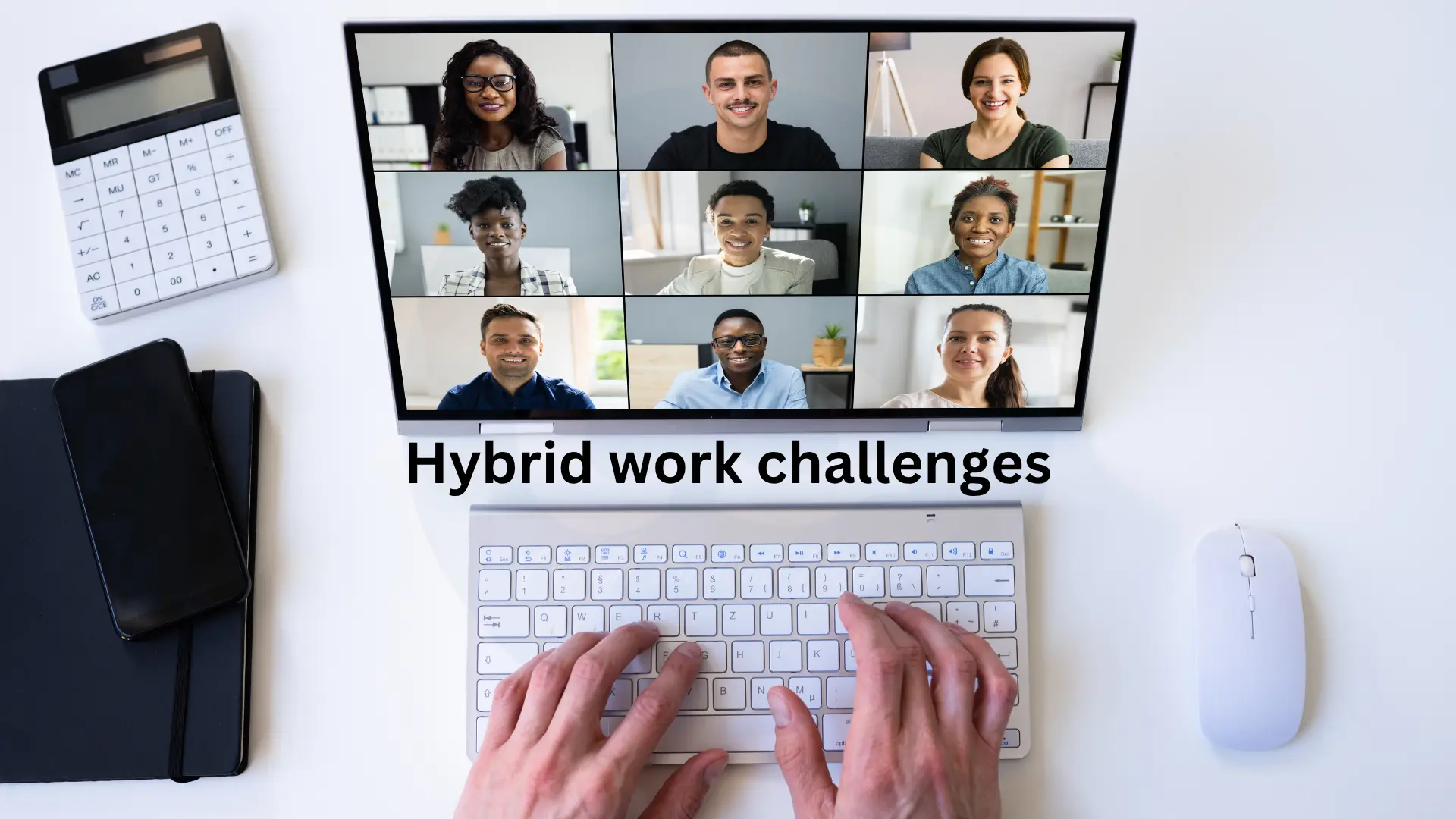
8. What are the top challenges faced in hybrid work-life balance?
Three come up repeatedly:
- Blurred lines between home and work
- Feeling “out of sight, out of mind”
- Unequal treatment between remote and office regulars
The solution is proactive visibility. Share updates, speak up in meetings, and don’t assume effort speaks for itself.
9. How can I avoid burnout or stay mentally healthy in a hybrid job?
Treat recovery as part of your work. Take breaks every 90 minutes, go for short walks, stay hydrated, and enjoy a digital detox after hours. This tip is workable for office people too. Try it out.
If it feels overwhelming, talk to your manager. Increasingly, leaders in India see well-being as performance fuel, not weakness.
10. How can managers support their hybrid employees’ work-life balance?
If you manage people, start with respect:
- Don’t send late-night pings
- Judge outcomes, not hours
- Check in for weekly support
A small act of trust in India’s growing hybrid workforce multiplies energy far faster than control ever will.
11. Is hybrid work really better for work-life balance than fully remote or onsite?
For most, yes. Hybrid offers flexibility with connection. But it only works if employees have some choice.
Rigid “3 days compulsory, no swaps” policies often feel worse than onsite. Choice is the real advantage.
12. What are the common mistakes professionals make with hybrid work-life balance?
The most common:
- Saying “yes” to everything
- Skipping breaks because you’re home
- Letting late-night calls spill in
- Not telling colleagues when you’re unavailable
Hybrid gives freedom. Don’t turn it into self-imposed 24/7 availability.
Related: Mental health in the workplace
13. How do meetings and collaboration work in a hybrid environment?
Make meetings work for everyone:
- Use video so remote colleagues aren’t sidelined
- Share notes after calls
- Cut down back-to-back online marathons
Shorter, sharper meetings protect both productivity and sanity.
14. What can companies do to improve hybrid work-life balance?
Forward-looking firms in India are already doing this:
- Offering home office allowances
- Funding well-being budgets (gym, therapy, coaching)
- Training managers in hybrid leadership
And with 60–90 million Indians expected to be hybrid or remote by 2025, companies that don’t adapt will lose talent fast.
15. What future trends should hybrid professionals be aware of?
Expect:
- AI tools built into workflows
- Co-working hubs are spreading to Tier 2 cities
- Mental health as a formal HR metric
Hybrid is here to stay. The professionals who remain curious and adaptive will thrive.
Conclusion
Hybrid work-life balance is the reality shaping careers in India today. With millions already working on this model and millions more expected by 2025, the question isn’t whether hybrid is here to stay, but how well we adapt to it.
- For professionals, that means building daily habits that protect energy and focus.
- For managers, it means shifting from control to trust.
- For organisations, it’s about designing policies that attract and retain talent in a competitive market.
If you’re looking for your next opportunity or shaping the future of your workforce, let’s talk.

Corporate Stalwarts is a trusted recruitment firm with 20+ years of expertise in executive search and leadership hiring.
We’ve placed 10,000+ candidates across 600+ companies in FMCG, Manufacturing, IT, Pharma, and more. Our 1M+ candidate pool and 48-hour turnaround enable fast, high-quality hiring solutions.
We help businesses build high-performance teams with precision, speed, and industry expertise.